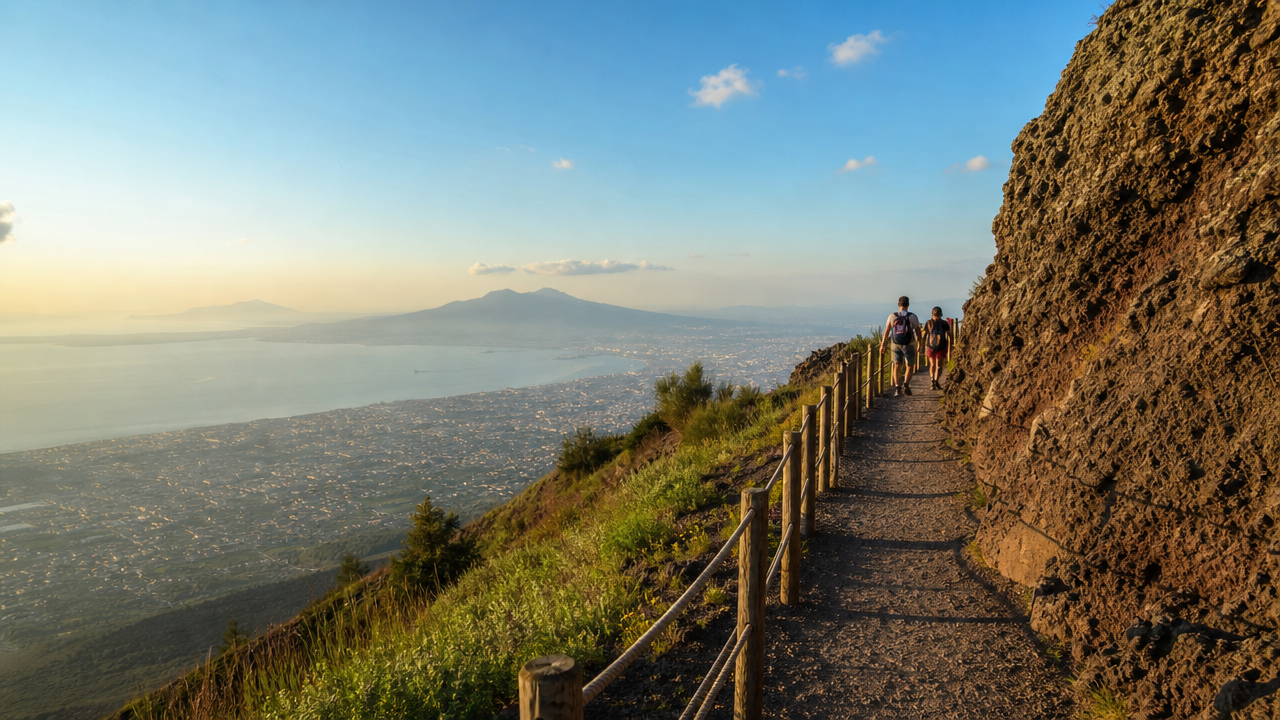
Mount Vesuvius
20 min drive
This volcano is responsible for the preservation of Pompeii and offers hiking paths with views of the caldera.

Travellers planning a Pompeii and Amalfi Coast day trip almost always start with a map question, and the map gives an answer that surprises them. The ancient city is not a coastal village at all — it is an inland archaeological park in the shadow of Vesuvius. This guide sets out exactly where it sits, how it relates to the coast road, and what that means for a single day.
Quick answer
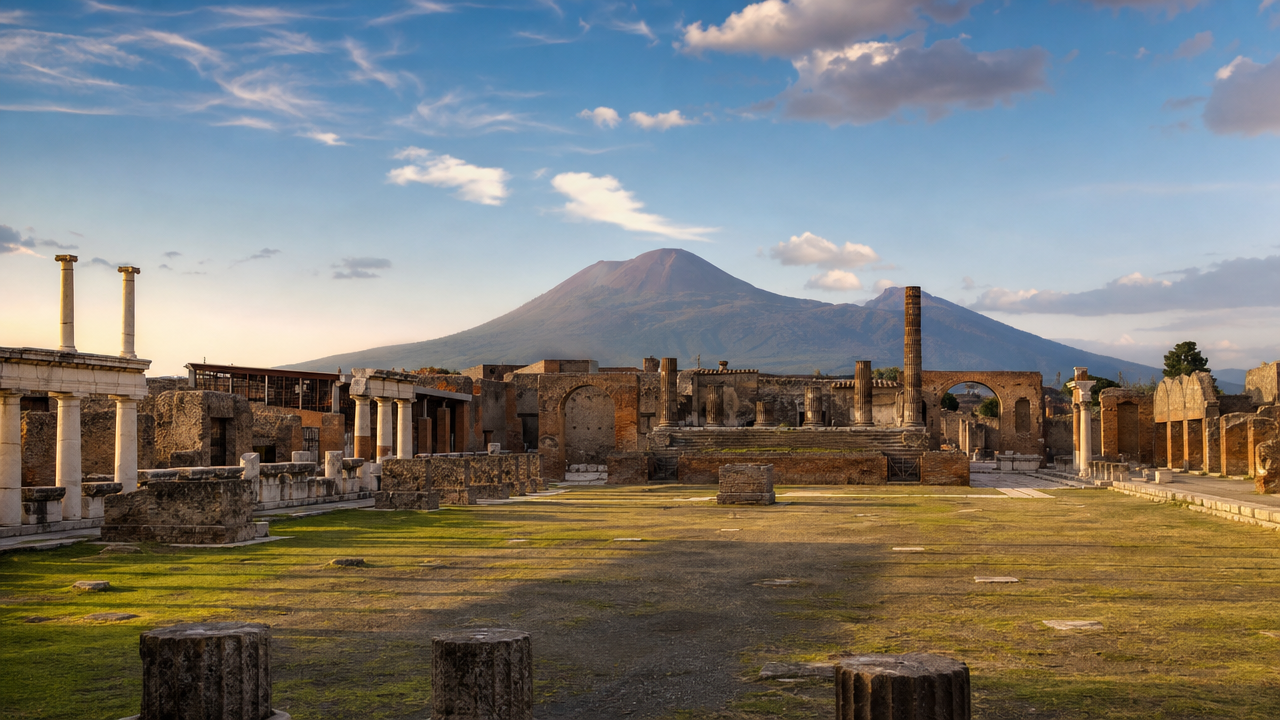
No. Pompeii is not on the Amalfi Coast. The excavations lie at Via Villa dei Misteri, 2, 80045 Pompei NA, Italy, on the inland plain beneath Mount Vesuvius, north of the Sorrentine peninsula that separates them. The two are close enough to combine in one day — the park runs 09:00–19:00 daily — but they are distinct destinations with different landscapes.
The ancient city was not a seaside resort in the modern sense, yet it was once a working port. Before the eruption of AD 79, the River Sarno ran navigable to its walls and ships tied up within a short walk of the forum. Volcanic debris pushed the shoreline roughly two kilometres away, leaving the ruins stranded inland. So the honest reply to is pompeii on the amalfi coast is that the site was never part of that stretch of cliffs, and today it does not even touch the sea. What confuses people is the shorthand used by tour listings. A Pompeii and Amalfi Coast tour bundles two sights that share the Bay of Naples but sit on opposite sides of a mountain spine. The archaeological park lies on the flat Campanian plain under Vesuvius, in the modern town of Pompei. The Amalfi Coast — Positano, Amalfi, Ravello — hangs on the southern face of the Sorrentine peninsula, reached by the SS163 corniche. Between them lie Castellammare di Stabia, the Monti Lattari, and a mountain pass. They are neighbours in the way that two rooms separated by a wall are neighbours. Understanding that geography changes how a day is planned rather than whether it is possible. The excavations are vast: the Forum, the Villa dei Misteri, the House of the Faun, the Stabian Baths, the amphitheatre and the plaster casts at the Garden of the Fugitives are spread across sixty-six hectares of exposed stone. Most visitors need two to three hours to cover a coherent route, and the site opens at 09:00. Coastal driving is slow by design, with single-lane curves and summer bottlenecks at Positano. A combined itinerary works best when the ruins come first and the coast fills the afternoon. Anyone still asking is pompeii on the amalfi coast will find the practical answer more useful than the cartographic one. Treat them as two halves of a Bay of Naples landmarks day, not as one continuous strip. Pay attention to shade, water and footwear — the ancient basalt paving is uneven, and August heat on the open Via dell'Abbondanza is unforgiving. The dedicated sections below cover arrival routes, timing windows, official hours and costs in detail, so this page simply frames the choice. Book the site portion around the morning opening and let the coast road dictate the rest.
“They are neighbours in the way that two rooms separated by a wall are neighbours.”
Pompeii is located inland near Mount Vesuvius, while the Amalfi Coast lies to the south across the Lattari Mountains. The most efficient connection involves taking the train to Pompeii before transitioning to regional bus or ferry services for the coast.
Circumvesuviana line from Naples to Pompei Scavi-Villa dei Misteri
SITA Sud bus from Pompei to Sorrento, then transfer to Amalfi
SS145 road from Pompeii toward Sorrento and Positano
Ferry from Sorrento to Amalfi or Positano
For the most efficient visit, aim to arrive at the site between 09:00–10:30 to avoid the largest crowds and peak heat.
The optimal time to visit is during the shoulder seasons of April, May, September, and October to balance manageable temperatures with lower visitor numbers. For daily trips, the best arrival window is 09:00–10:30 to avoid the largest crowds and peak heat.
Mild, 15°C to 23°C. Ideal for walking.
These months offer pleasant weather before the summer heat intensifies. Coastal road traffic remains manageable.
Hot, 25°C to 32°C. High humidity.
Expect heavy traffic on Amalfi coastal routes and dense crowds at the ruins. Prioritize early morning starts.
Warm, 18°C to 26°C. Cooling down.
The sea remains warm, while coastal traffic decreases. Sites are more accessible than in mid-summer.
—
Arriving during the 09:00–10:30 window allows you to navigate the ruins before mid-day tour groups arrive.
Verdict: Plan your trip for a Tuesday to Thursday in April or October, targeting the 09:00–10:30 arrival window to experience the best balance of weather and crowd density.
The Pompeii archaeological site operates on a consistent daily schedule throughout the week. Planning your arrival within the recommended window supports a structured day trip itinerary.
Several historical and natural sites are located within a short distance of Pompeii, allowing for a comprehensive regional itinerary. Integrating these locations provides a broader perspective on the history and geography of the Bay of Naples.
20 min drive
This volcano is responsible for the preservation of Pompeii and offers hiking paths with views of the caldera.
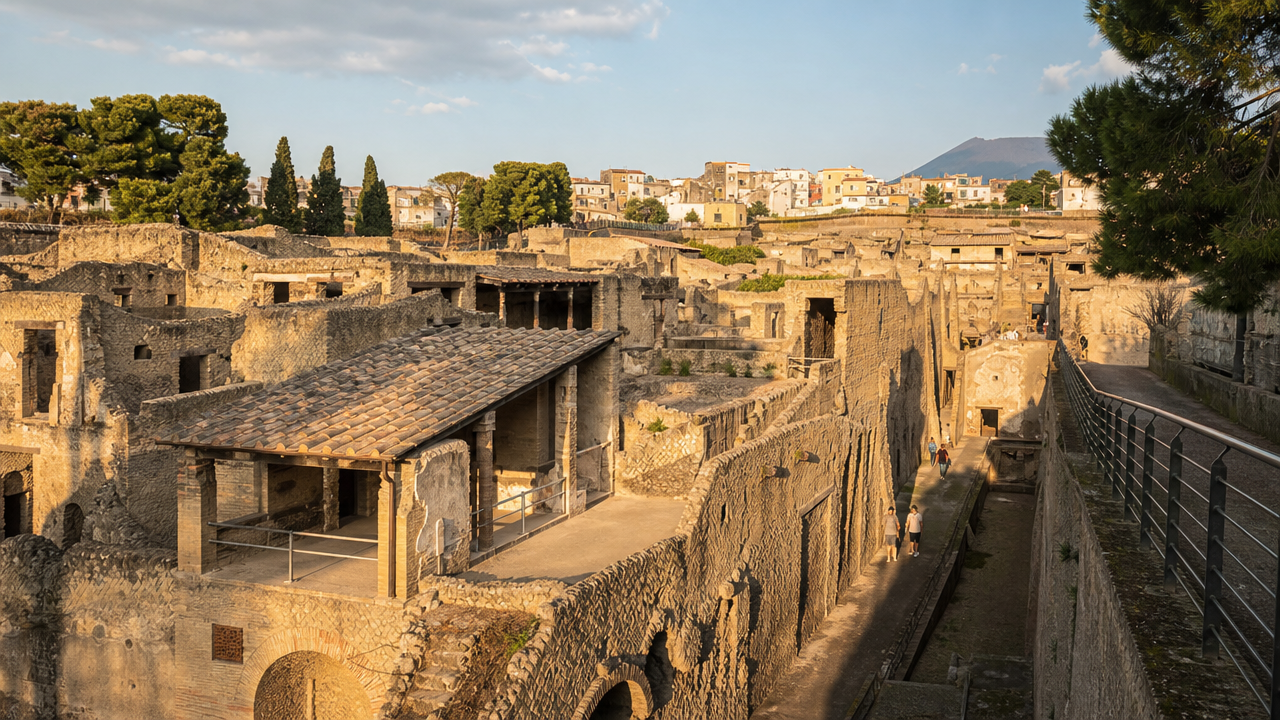
25 min drive
Like Pompeii, this town was buried by the 79 AD eruption but features better-preserved wooden structures and organic materials.
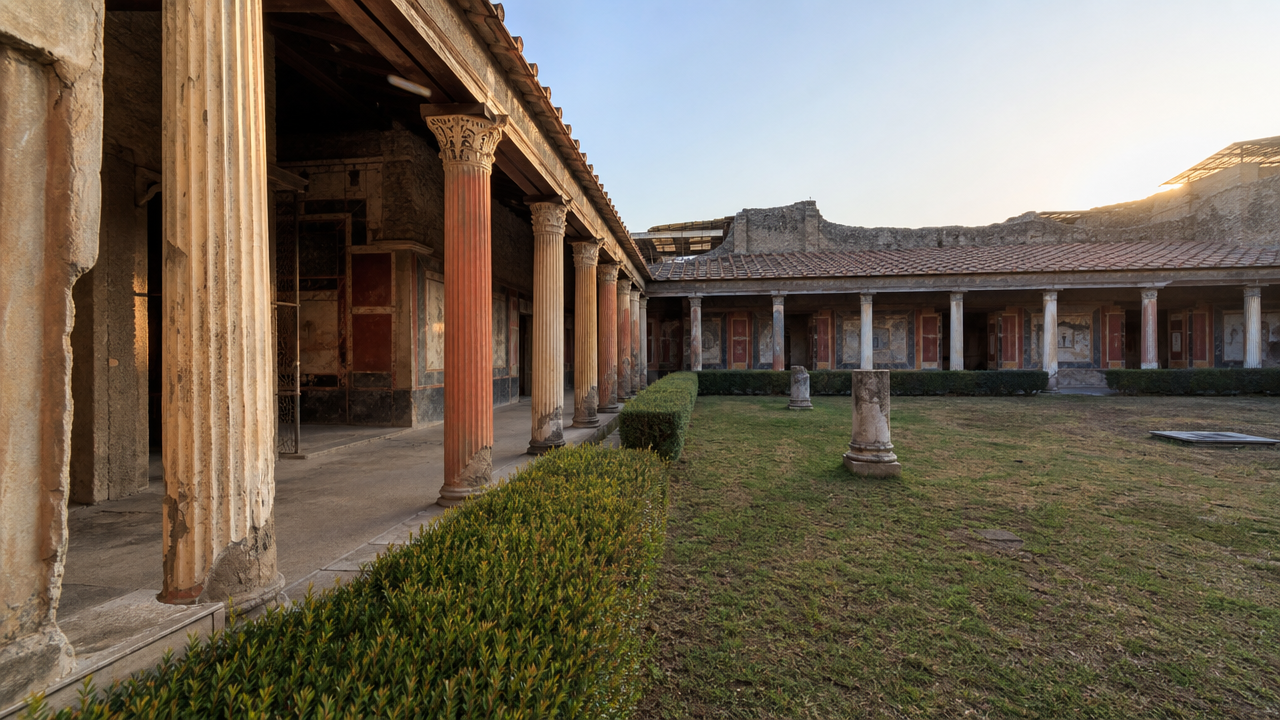
15 min drive
Known as the Villa of Poppaea, this site showcases luxurious Roman architecture and frescoes often included in expanded archaeological tours.

40 min drive
Many of the original artifacts, mosaics, and sculptures recovered from Pompeii are housed here, providing context to the ruins.
Everything you need to know about is pompeii on the amalfi coast
No, Pompeii is not on the Amalfi Coast. It is located near Naples, while the Amalfi Coast lies further south along the Sorrentine Peninsula. Many travelers wonder is pompeii on the amalfi coast because both sites are prominent landmarks in the Campania region. Coordinating a trip to both allows visitors to see the Vesuvius eruption aftermath alongside the famous coastal cliffs. Asking is pompeii on the amalfi coast often helps tourists realize they need separate transit plans for these distinct destinations. Because they are separate, a Pompeii and Amalfi Coast day trip requires careful scheduling. Travelers often start with the ruins before heading toward the coastal towns. While some inquire is pompeii on the amalfi coast to simplify their itinerary, knowing they are distinct ensures better travel efficiency. The distance varies based on your specific destination within the Amalfi Coast, such as Positano or Amalfi. Travel times depend heavily on traffic, especially during the summer months when coastal roads are busy. The entrance fee for the ancient city of Pompeii is 20 EUR for standard adult entry. This ticket provides access to the extensive UNESCO heritage site and its historic Roman structures. Arriving between 09:00–10:30 is recommended to avoid the largest crowds and peak heat. This arrival window ensures you can explore the stone streets and villas before the site becomes most crowded.
Pompeii & Amalfi Coast Tours from Naples Cruise Port
Read more GuideGetting from Naples to the Amalfi Coast
Read more GuideTravel Times: Naples to Amalfi Coast
Read more GuideTaxi Costs to Pompeii from Naples
Read more Tickets & toursPompeii & Amalfi Coast Tours from Naples Port
Read more Tickets & toursPrivate Pompeii & Amalfi Coast Tours
Read more